
Why Blueberries is Great for Middle-Aged Men
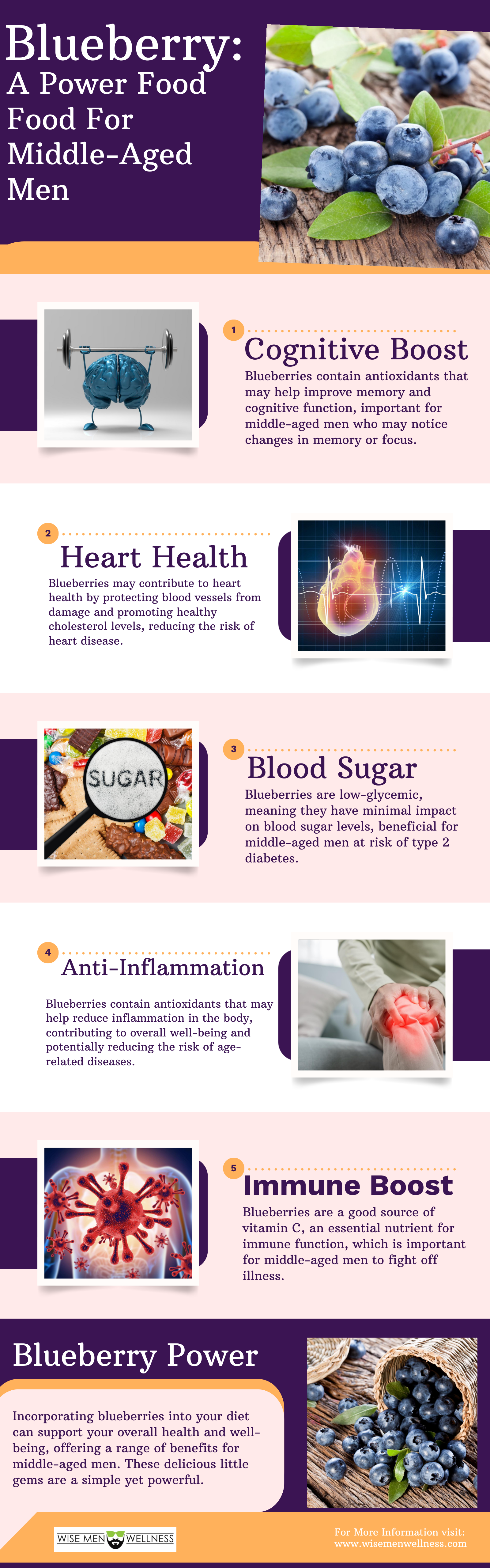
Blueberries, bursting with flavor and vibrant color, are more than just a delicious addition to your breakfast bowl. They offer a surprising array of potential health benefits that may be of particular interest to middle-aged men. Here’s a closer look at why incorporating blueberries into your diet can be a wise choice:
1. Supporting Cognitive Function: As we age, cognitive function can become a concern. Blueberries are rich in anthocyanins, a type of flavonoid antioxidant. Research suggests that anthocyanins may have neuroprotective benefits and may help improve memory and cognitive function. This can be especially important for middle-aged men who are starting to notice changes in memory or focus.
2. Heart Health Benefits: Maintaining a healthy heart is crucial throughout life. Blueberries may contribute to heart health in several ways. They contain antioxidants that may help protect blood vessels from damage and may also promote healthy cholesterol levels. This can be beneficial for reducing the risk of heart disease, a leading cause of death for men.
3. Managing Blood Sugar: Blood sugar management becomes increasingly important with age. Blueberries are a relatively low-glycemic fruit, meaning they have a minimal impact on blood sugar levels. This can be particularly beneficial for middle-aged men who are at risk of developing type 2 diabetes.
4. Anti-Inflammatory Potential: Chronic inflammation is linked to various age-related health issues. Blueberries contain antioxidants that may help reduce inflammation in the body. This may contribute to overall well-being and potentially reduce the risk of chronic diseases like arthritis, which can become more prevalent in middle age.
5. Immune System Support: A healthy immune system helps fight off illness. Blueberries are a good source of vitamin C, an essential nutrient for immune function. Maintaining a strong immune system is important throughout life, but especially as we age and become more susceptible to infections.
REFERENCES
Health benefits
- https://www.ncbi.nlm.nih.gov/pmc/articles/PMC3582325/
- https://pubmed.ncbi.nlm.nih.gov/17092827/
- https://www.ncbi.nlm.nih.gov/pmc/articles/PMC4488775/
- http://www.bmj.com/cgi/doi/10.1136/bmj.f5001
- https://www.ncbi.nlm.nih.gov/pmc/articles/PMC3762447/
As Anticancer
- https://www.ncbi.nlm.nih.gov/pmc/articles/PMC2835915/
- https://www.ncbi.nlm.nih.gov/pmc/articles/PMC47258/
- https://pubmed.ncbi.nlm.nih.gov/22175691/
- https://pubmed.ncbi.nlm.nih.gov/17602170/
- https://pubmed.ncbi.nlm.nih.gov/22733001/
- https://pubmed.ncbi.nlm.nih.gov/23507228/
- https://pubmed.ncbi.nlm.nih.gov/20564502/
